
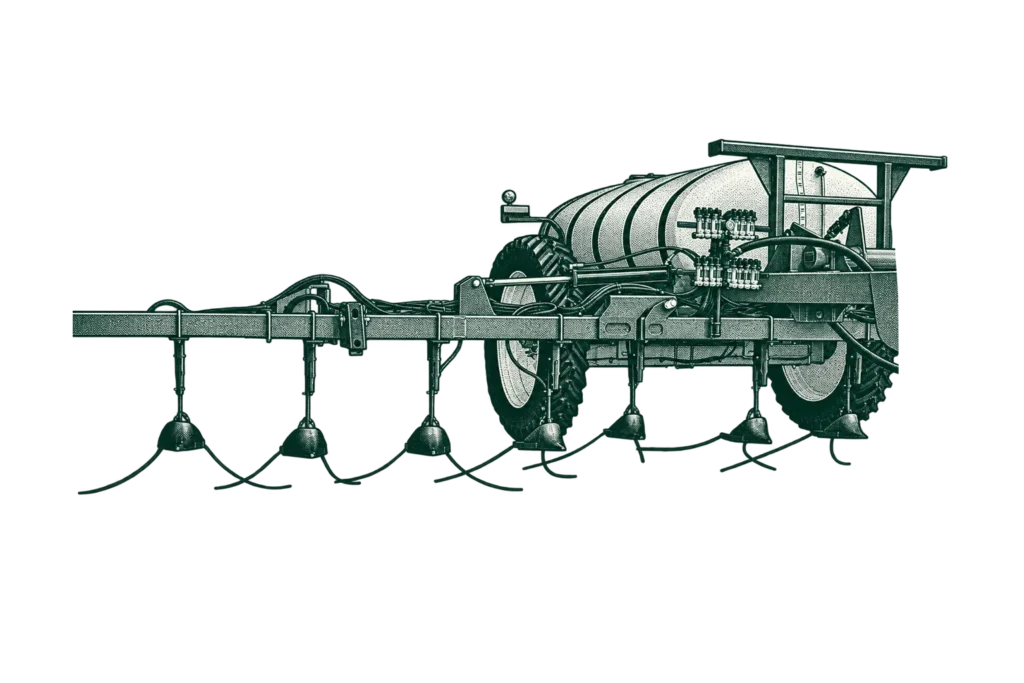
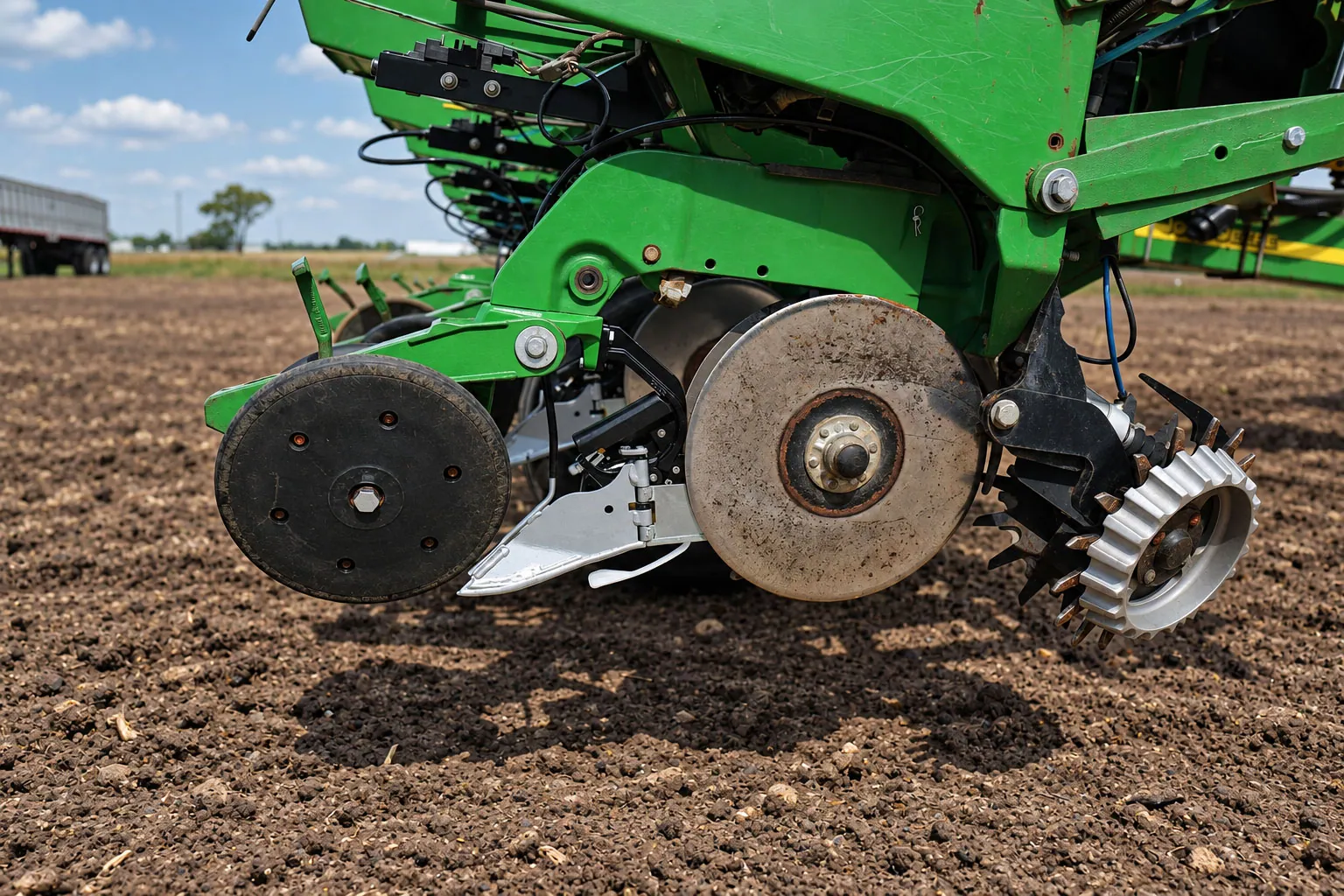
Uniform emergence starts with consistent seed-to-soil contact. An Indiana study at Peters Farms and Hoosier Precision Ag compared four seed-trench closing combinations, including three traditional closing wheels paired with 360 WAVE.
Trial setup
The planter used one row for each treatment. Plant counts were collected from 1/1000-acre samples and replicated 15 times. Conditions included fall strip-till, corn after soybeans and good soil moisture at planting.
Stand result: Adding 360 WAVE increased plant count by an average of approximately 1,200 plants per acre across the closing-wheel combinations tested.
Measured stand gain and estimated yield potential
The report used an industry rule of thumb of 7 bushels for each additional 1,000 plants per acre to estimate an 8.4-bushel potential response. That figure is an estimate based on plant population—not a harvested-yield comparison from this trial—and should be presented that way.
What farmers can take from the study
All three rows using 360 WAVE posted higher plant counts than the closing-wheel-only treatment. The response was similar with Furrow Cruiser and cast-wheel combinations, while the rubber-tire combination also improved.
The study suggests that bottom-up trench closing can complement several existing closing-wheel styles. Actual yield response will depend on emergence uniformity, final stand, weather and the field’s overall yield potential.