
Save more of what you grow.

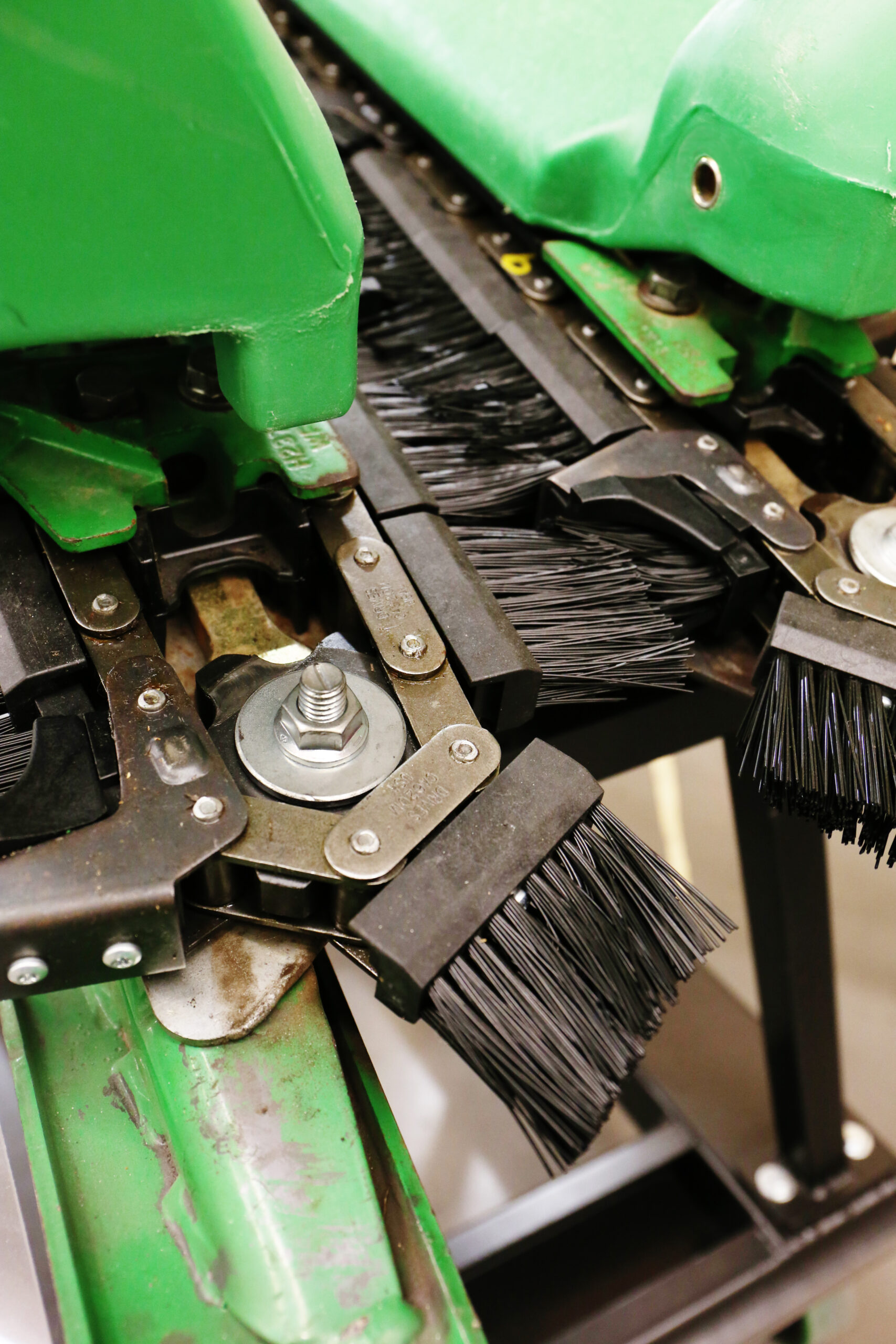
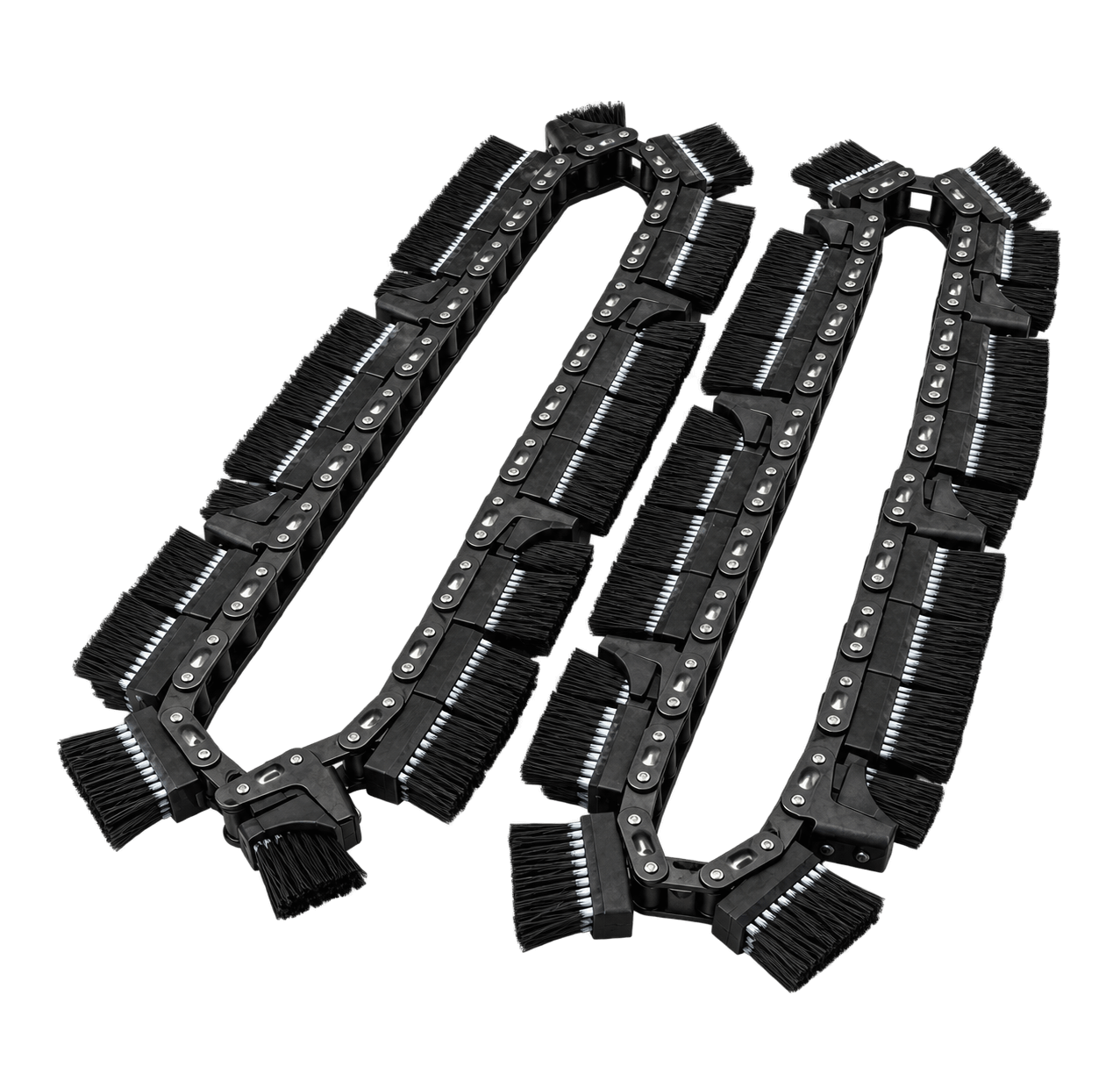
360 YIELDSAVER brush-equipped gathering chains for corn headers

REDUCE HEADER LOSS

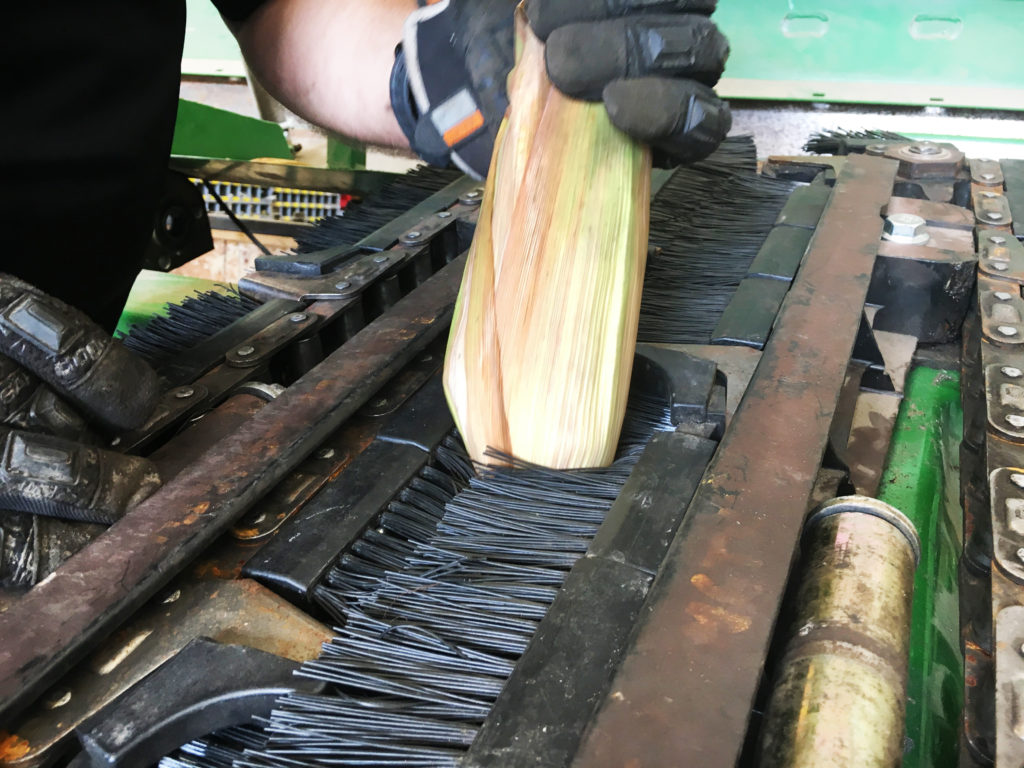
CUSHION EVERY EAR

A DURABLE, SERVICEABLE UPGRADE

Play Video

OVERVIEW

360 YIELDSAVER brush-equipped gathering chains for corn headers

Bristle and Block Life:

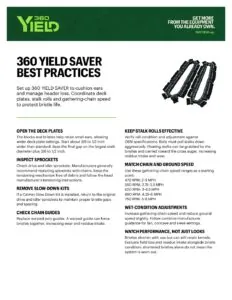
On average, users get between 100 and 150 acres per row on a set of brush blocks. There are many variables that can affect wear life such as header/ground speed, hybrid moisture, sprocket wear and stalk roll settings. And it is important to understand that brush blocks that look worn are not necessarily “worn out.”

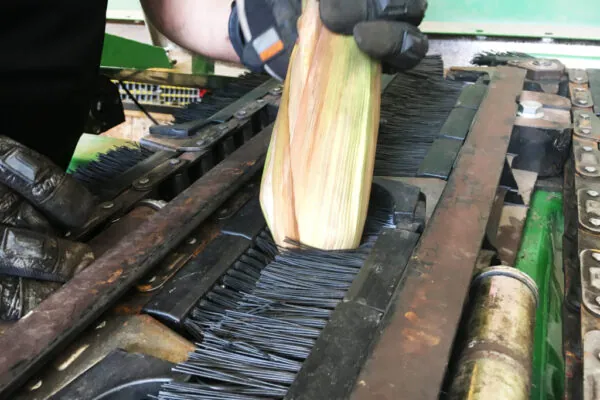
After use, the bristles will start to droop and there will be a gap between the sets of bristles. But the 360 YIELDSAVER is likely still capturing loose kernels. Even after 150 acres per row, the product still reduces shelling and captures kernels – but rather than 80% kernel savings, the saving rate will drop to 60% then 40%. The rate of wear diminishes as the bristles get shorter.

The decision to replace brush blocks should be determined by checking header loss and determining the ROI of replacement blocks based on the header loss observed.

Chain Life:

The 360 YIELDSAVER chain is made by the same suppliers and to the same specs as OEM gathering chains. You should expect the same wear life on 360 YIELDSAVER chains as you experience with your current chains.

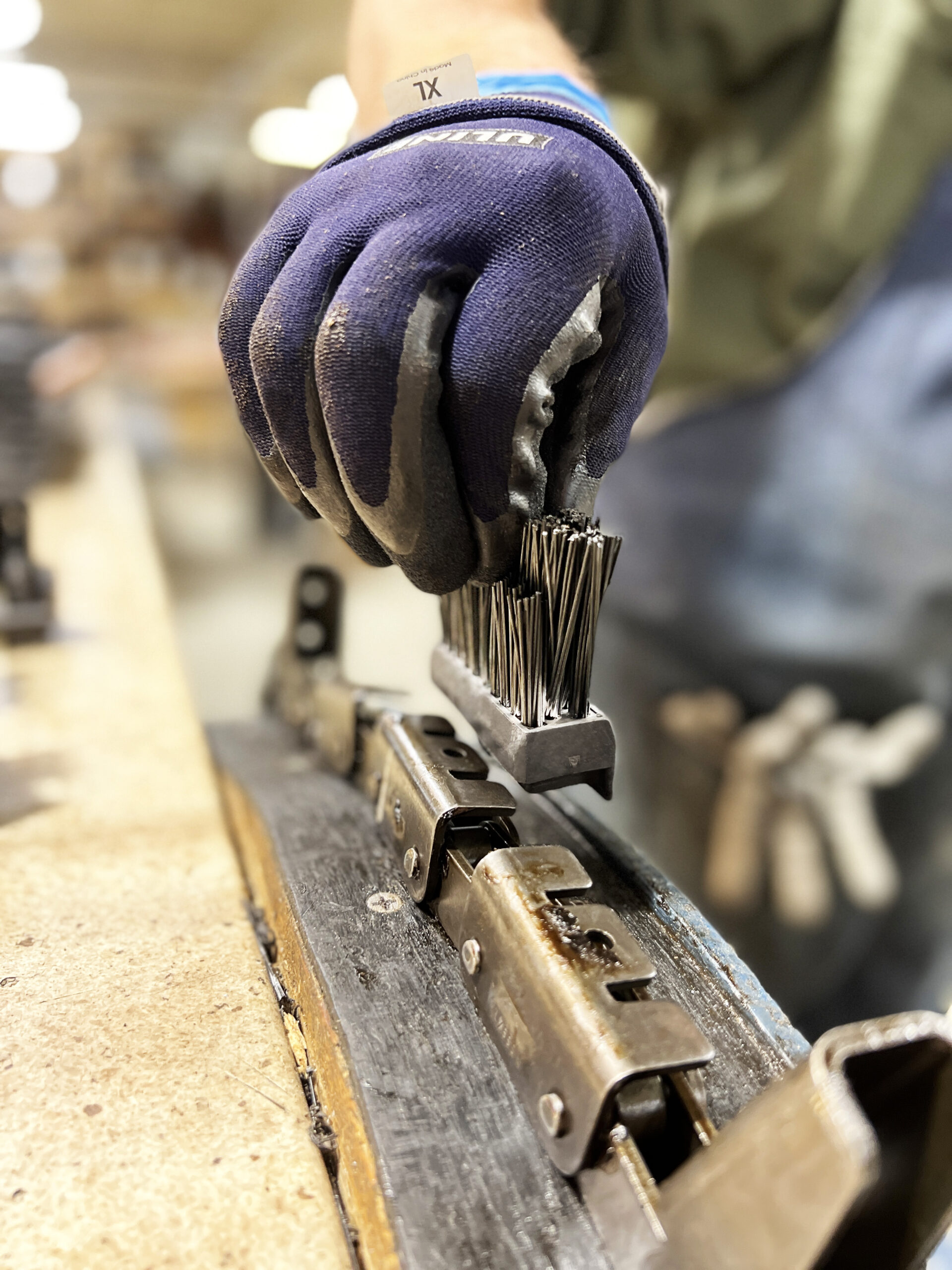
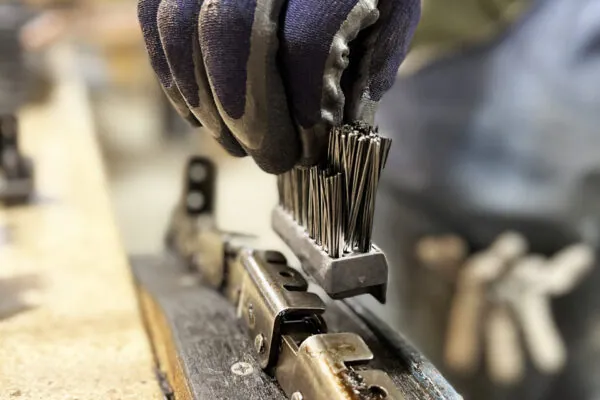
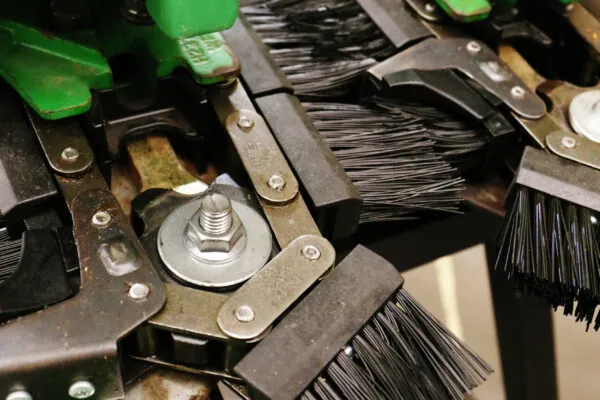
No. The 360 YIELDSAVER chain is customized to include a metal clip. The brush block slides over this clip and is retained by a screw.

The answer is yes . . . and no.

In most hybrids and most harvest conditions, little additional leaves and tops will come in to the feeder house. In other hybrids and harvest conditions (moisture, after a freeze for example) you may observe an increase in residue.

Testing shows that this modest increase in residue can be managed through adjusting combine settings and ensuring that stalk rolls are adjusted and aggressively pulling stalks through the head. 12 and 16 row heads will be most susceptible to residue bunching in the center as many rows feed into the pinch point of the feeder house.

Note that there is a short break-in period where the new, stiffer bristles may bring in more residue initially. But over time, this will subside.

No. But aggressive stalk rolls like 360 CHAINROLL ensure that stalks are pulled down through head efficiently. It is important to have well maintained and well-adjusted stalk rolls.

It generally takes 10 to 15 minutes per row to remove the old chain, install the brush blocks on the new 360 chain and re-install the 360 YIELDSAVER chain on the head. We also offer a pre-assembled 360 YIELDSAVER that has the blocks already installed on the chain.

This varies by the type of head and the acres on the brush blocks.

When chains are first installed, some heads will have bristles that overlap from bottom to top. Others, such as Drago, will overlap at the bottom but have a gap at the top. After break-in and use, the bristles will bend and wear and there will be a gap. This gap doesn’t mean the brush blocks are worn out. 360 YIELDSAVERs continue to save kernels by cushioning ears and sweeping kernels to the cross auger.

Manufacturers recommend replacing sprockets when you replace gathering chains. This increases the wear life of the chain. So while it is not required, it is strongly recommended.

In some conditions and with some snout designs the bristles can carry leaves around and under the snout. There is no negative consequence from this, but many growers are concerned about increased bristle wear and just don’t like seeing the residue packed under the snout. We have developed a shield that acts as a tunnel to direct leaves out from the head.

No, they are not required. The brush blocks make their own “tunnel” through any leaves under the snout and we do not observe any increase in wear. But the shields are a simple and low-cost option that eliminates the leaf accumulation and extra residue under the snout.

We have tested the chain and brush blocks for damage from UV, cold, rodents and moisture and find that there is no need to remove them for storage. It is common that growers will remove the blocks after the season in anticipation of replacing them for next season.

Chains (and blocks/bristles) should not be oiled for storage – chain manufacturers generally recommend that chains are blown clean but not oiled. The oil can attract dust and increase wear. If chains are removed for storage, hang them in a dry location or, if you purchased assembled 360 YIELDSAVERs, store them in their shipping boxes.

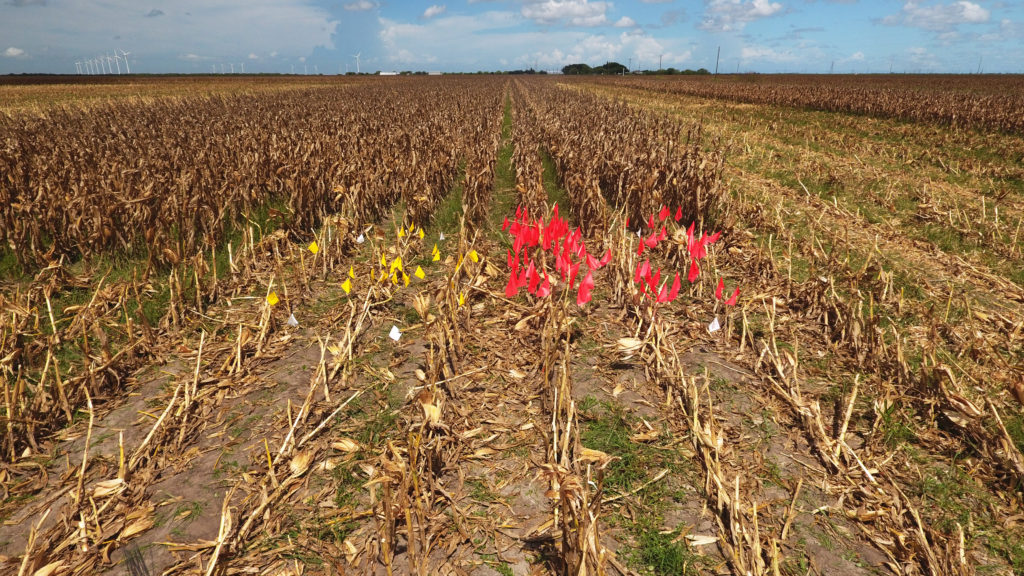
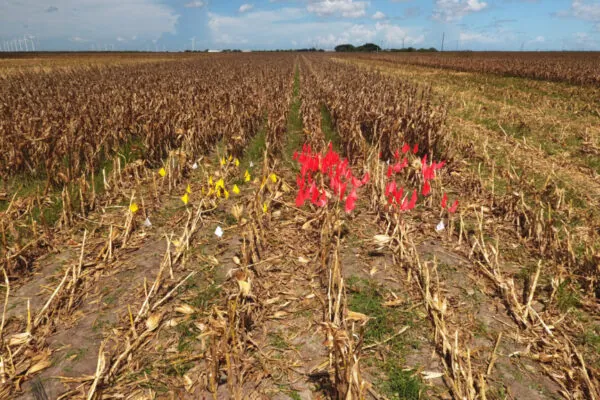
During a normal harvest pass, conduct a power shut down. After restarting, back the combine up 15 feet. Go to the area where the corn head was and select three to five rows and gently clear away residue from a five ft. strip that includes two rows and one middle. Count the number of kernels including the kernels from any small ears and nubbins. The total number of kernels divided by two equals the bushels per acre loss.

Because 360 YIELDSAVER reduces butt shelling and kernel loss, you can set your combine to optimize crop intake and stalk processing. Often this means you can increase your head speed. Ideally synchronizing head speed and ground speed so you are not pushing or pulling stalks through the stalk rolls. You can also run the deck plates wider because you are no longer as concerned about losing those small ears and nubbins through the plates.

Will interference between the brushes and the metal brackets on the head speed up wear?

There are a few heads, like the Lexion, that have a gusset at the top of the snout. This can cause interference which will accelerate wear. We recommend trimming the gusset to eliminate interference.

After break in, savings average 80%.

This will vary based on corn moisture and hybrid. Savings decline as the bristles begin to wear. But because ears hit the poly block instead of the deck plates, there is a cushion effect that reduces the amount of shelling regardless of bristle length.

Yes, the extra reach from the bristle blocks help feed down corn into the head.

Make Model
John Deere 40 Series and 90 Series
John Deere 600 Series 2008–2012
John Deere 600 Series 2012+
John Deere 700 Series / C Series
Case IH 1000 Series
Case IH 2000 Series
Case IH 2600 Series
Case IH 3000 Series
Case IH 4000 Series
New Holland 996
New Holland 98C
New Holland 98D
New Holland 99C
New Holland 980
Geringhoff North Star 20"
Geringhoff North Star 30"
Drago Series I
Drago Series II
AGCO Hugger 3000

FIND THE RIGHT FIT FOR YOUR OPERATION.